UCSF Health launched outpatient and hybrid pathways for CAR‑T, bispecific and autologous BMT patients, supported by Current Health’s passive monitoring and 24/7 nurse oversight.
CAR‑T and bispecific therapies have meant long, planned inpatient stays for post‑infusion and step-up dosing (SUD) monitoring — occupying valuable beds for days or weeks. UCSF wanted to expand access and protect margin without compromising safety or clinical oversight.
High-value bed requirements for post-infusion monitoring limited the volume of advanced therapy cases that UCSF could accommodate.
With volume limited by inpatient capacity, referral demand became a ceiling instead of an opportunity to grow.
Moving care home only works if the clinical team keeps continuous visibility and can escalate the moment it matters.
Eligible patients go home after infusion with a Current Health kit. Passive monitoring and a dedicated nurse team do the watching, catching deterioration early and escalating to the UCSF clinical team according to program protocols.

Patients are selected based off established clinical criteria and enrolled in a pathway created for their specific diagnosis, Car T, Bispecific, and auto transplant. They are then educated and fitted with the Current Health wearable before discharge.
The wearable streams heart rate, respiratory rate, SpO2 and skin temperature continuously — surfacing physiological signals of CRS earlier than a single spot temperature check and preventing burdens on caregivers to identify adverse events.
Current Health nurses triage every alarm in real time, contact patients directly, and triage, resolve or escalate to the UCSF team per site protocols, resolving, the majority of clinical concerns without needing to reach out to HCPs.
Program data across CAR‑T, bispecific and transplant pathways, monitored for an average of six days each.
Patients managed on the platform in the first six months.
Inpatient bed days saved — every one backfilled by another heme/BMT patient needing inpatient care.
Of clinical concerns managed without escalation to a provider.
Of patients had no clinical alarms.
By moving post‑infusion monitoring home, UCSF recognized cost savings from 340B and outpatient pricing — and freed beds while increasing volume. Returned inpatient capacity was backfilled, accelerating throughput.
Average days monitored per patient across all pathways.
Of saved bed days redeployed to other heme/BMT patients needing acute care.

Tricia Estacio, RN
Director of Nursing, Parnassus Infusion & Apheresis
UCSF Medical Center
UCSF launched the outpatient and hybrid pathways with deliberately narrow eligibility criteria and a conservative, safety‑first rollout. With the model proven over the first six months, the team is now revisiting those criteria to bring more patients onto the outpatient pathway.
UCSF opened with careful eligibility criteria, keeping the first outpatient cohorts small while accruing clinician confidence in the model.
Early results held up: patients did well in the outpatient setting and the safety net performed — giving the team confidence in who could be managed at home.
With the model proven, UCSF is reviewing its eligibility criteria to move more patients outpatient, using hybrid pathways for the higher risk patients.
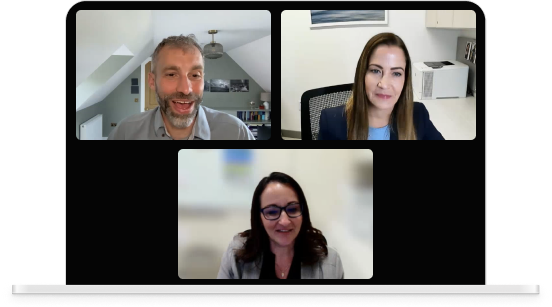
Hear UCSF’s Janelle Smith Hernandez and Tricia Estacio walk through how they built their inpatient‑outpatient (IPOP) model — the selection criteria, the staffing, and the first‑six‑month results — in conversation with Current Health CMO Dr. Matt Wilkes.