Our Solution / Advanced Therapy Toxicity Detection
Toxicity detection built for complex advanced therapy patients
CAR-T and bispecific patients are often older, heavily pretreated, and living with other conditions. Treating them safely in outpatient and community settings takes advanced therapy toxicity detection that catches CRS and ICANS early, and recognizes the infections, cardiac events, and falls that also send patients back to the hospital.
7 hrs
median earlier CRS recognition than standard inpatient nursing (Mount Sinai)
80,000+
patients cared for through our platform
80%
of patient issues resolved by our nurses without site escalation
60
peer-reviewed papers and abstracts
Our approach
A multi-parameter approach to advanced therapy toxicity detection
Fever is usually the first sign of CRS, but not always. Steroids, tocilizumab, and antipyretics, given as premedication, prophylaxis, or treatment, can blunt or mask it. We look at the full picture to help nurses tell a patient whose fever is resolving from one who is deteriorating.
Physiological signals
Heart rate, respiratory rate, SpO₂, and temperature read together, including the signals that set CRS severity.
Symptoms and assessments
Patient-reported symptoms and virtual ICE assessments capture more than vital signs alone.
Expert clinical review
A nurse reviews every alarm and assesses the patient, for CRS, ICANS, and everything else.
Treatment and escalation per your protocols
Our nurses start protocolized treatment, escalate, or arrange a planned admission as your protocols direct, with the full clinical picture attached.
Documented end to end
Every reading, call, and decision is recorded and visible to your team, with EHR integration available.
Matched to the risk profile
Monitoring with a purpose, configured to each therapy
Every advanced therapy carries its own toxicity profile, and each patient brings their own risk. We match the intensity of monitoring to the asset, so every patient gets the oversight their treatment calls for, whether CAR-T, bispecific, TIL therapy, or monoclonal antibody.
Current Health for CAR-T
For higher-risk profiles
Passive multi-parameter monitoring
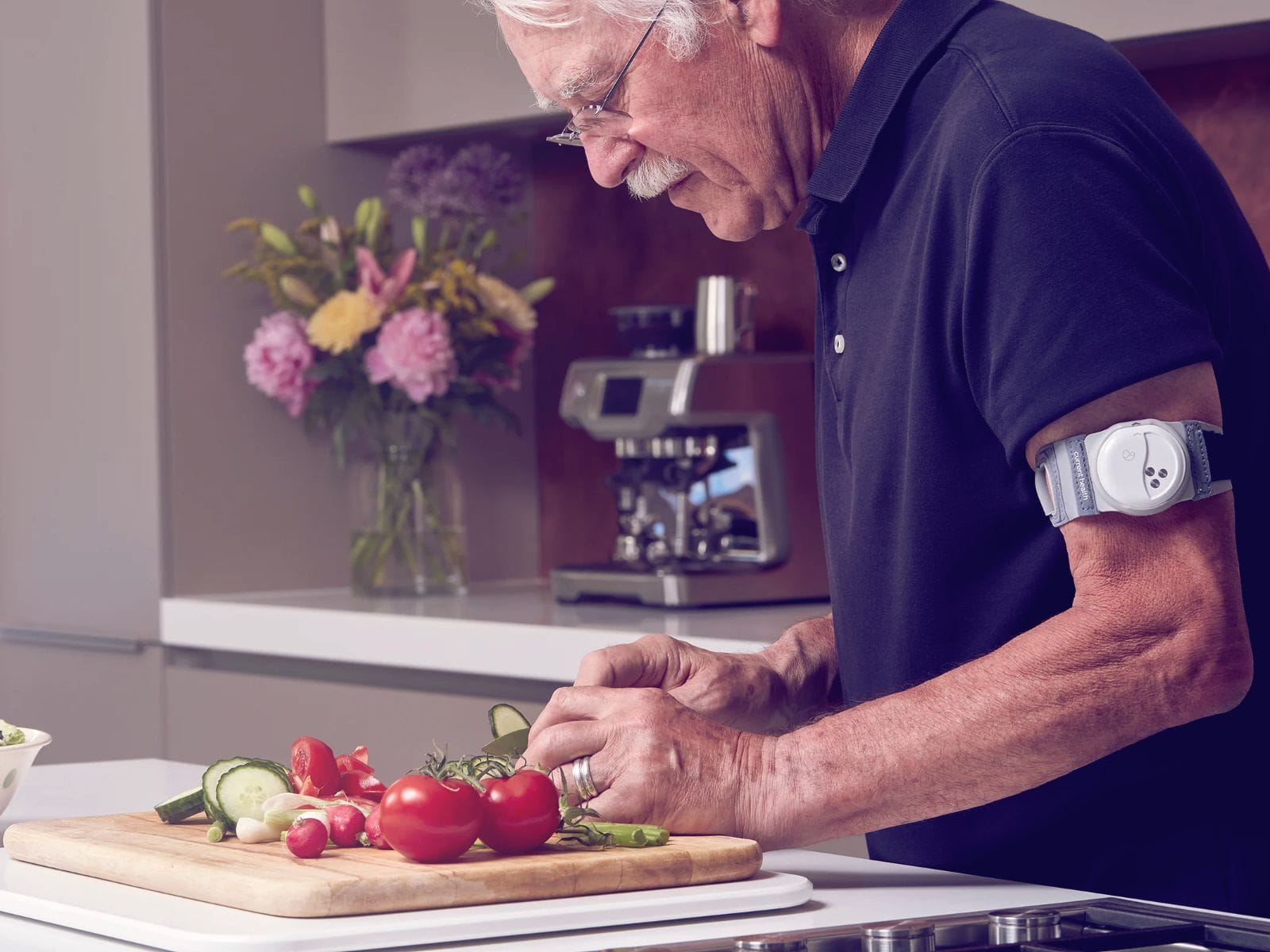
Passive, around-the-clock monitoring for therapies and patients where toxicity can escalate quickly or present without fever.
Typical use
Outpatient CAR-T and frail, heavily pretreated, or comorbid patients
Signals
Heart rate, respiratory rate, SpO₂, skin temperature, and activity from a wearable, plus an axillary temperature patch
Symptoms
Symptom surveys and ePROs alongside the passive signals
Neurotoxicity
Virtual ICE assessments by our nurses
CRS
Patented multi-parameter CRS detection
Patient role
No active input needed between check-ins
Current Health for Bispecifics
For lower-risk profiles
Guided at-home check-ins
Essential temperature and symptom check-ins with expert clinical oversight, for therapies and patients with a lower, well-defined window of risk.
Typical use
Bispecific step-up dosing and well-supported CAR-T patients
Signals
Temperature, blood pressure, and SpO₂ readings submitted through the Current Health app
Symptoms
Scheduled symptom surveys and ePROs, including validated CRS and ICANS scales
Neurotoxicity
Virtual ICE assessments by our nurses
Patient role
Short, guided check-ins on the schedule your protocol sets
The same clinical team behind both. Every patient is supported by our 24/7 Clinical Coordination Center, with escalation protocols set by your team. What changes is how much signal the risk calls for, not the level of clinical rigor.
CRS detection
Catch CRS early, and track how it progresses
Under ASTCT consensus grading, fever starts the picture, but hypotension and hypoxia set the grade. With continuous monitoring in place, our patented CRS detection reads several physiological signals together, so nurses can see escalation forming instead of waiting for the next temperature check.
The signal everyone monitors
Fever
Usually first to appear, but on its own it never moves a patient past Grade 1.
Often precedes fever
Tachycardia
An early read on hemodynamic stress, ahead of hypotension.
Defines Grade 2 and above
Hypoxia
SpO₂ drift marks escalation, and continuous monitoring tracks it as it happens.
Frequently underappreciated
Tachypnea
Respiratory rate often rises early and is easy to miss with spot checks.
7 hrs
median earlier recognition of CRS than standard inpatient nursing
Mount Sinai · JCI Insight 2026
100%
of CRS events detected during outpatient bispecific step-up dosing, all Grade 1
Memorial Sloan Kettering · ASH 2025
ICANS detection
A purpose-built workflow for neurotoxicity
Our nurses run virtual ICE assessments at the intervals your protocol sets, so patients don't need extra clinic visits to be screened. Every result stays in the platform side by side, which makes subtle changes easy to spot and escalation clear when it's needed.
01
Scheduled virtual ICE assessments
Delivered by our nurses over video at the optimal intervals for each therapy.
02
Handwriting captured and compared
Writing samples are stored in the platform, so changes from baseline are easy to see.
03
Validated symptom scales
CRS and ICANS symptom scales and daily patient-reported outcomes fill in the picture between assessments.
04
Clear escalation
Any drop in ICE score or new neurologic change is escalated to your team per your protocol, with the ICE trend and handwriting samples attached.
Beyond CRS and ICANS
Experience with everything that can happen at home
CRS and ICANS are where risk concentrates, but they aren't the whole story. Our team routinely identifies and manages the other adverse events that drive hospitalization in complex patients, drawing on years of caring for high-acuity patients outside the hospital.
Infection and sepsis
Including neutropenic fever, often with fever masked by prophylaxis.
Hypotension and dehydration
Hemodynamic decline recognized at home, before it becomes an emergency.
Neurologic changes
Altered consciousness, stroke-like symptoms, and delirium, plus later-onset movement or personality changes.
Cardiac events
Arrhythmia, chest pain, and decompensation.
Chronic condition flare-ups
Heart failure and COPD exacerbations.
Falls and medication reactions
Safety events beyond the therapy itself.
20,000+
advanced therapy patient monitoring days
Built for frail patients
Accessible experiences that help drive high adherence
Detection only works if patients stay on monitoring. Adherence holds steady across age groups in our community CAR-T programs, and our oldest patients are often among the most consistent.
Median wearable adherence by age
187 patients across community CAR-T sites
76%
20–39
n=9
78%
40–49
n=12
82%
50–59
n=32
83%
60–69
n=58
78%
70–79
n=61
83%
80–89
n=15
Age group, with number of patients in each group.

From detection to intervention
Detection is only the start
Catching a physiological signal only supports a care model if it triggers what happens next. With Current Health, every alarm goes to a nurse who knows these patients, works your protocol, and escalates only when it's needed.
55%
of clinical alerts occur in the 8 overnight hours
Sarah Cannon
Our research
The evidence behind our detection model
Our clinical research team works with partner sites to define, test, and publish how toxicity detection works outside the hospital, with 60 peer-reviewed papers and abstracts since 2023.
CAR-T
Earlier CRS recognition with continuous monitoring1
7 hrs
median earlier recognition of CRS than standard inpatient nursing care
Physiological signals flagged CRS a median 7 hours before standard nursing recognition in CAR-T patients.
Bispecifics
Outpatient step-up dosing for bispecific T-cell engagers2
100%
of CRS events detected by monitoring, every event Grade 1
In our study with Memorial Sloan Kettering, 89% of patients with relapsed or refractory myeloma who began step-up dosing outpatient reached full dose.
CAR-T · Timing
When CRS and ICANS occur after infusion3
98% · 96%
of CRS and ICANS events, respectively, occurred within the first 15 days
Timing data that supports a risk-adapted model, concentrating monitoring when risk is highest.
1. Rajeeve S, et al. JCI Insight. 2026;11(12):e203988. Mount Sinai; 25 evaluable patients. 2. Rajeeve S, Wilkes M, Zahradka N, et al. ASH Annual Meeting 2025, Abstract 2751. Memorial Sloan Kettering; 17 patients, 18 treatments. 3. Cox T, et al. Comparison of 15- vs. 30-day remote patient monitoring for outpatient CAR-T across a large health system. Blood. 2024;144(Suppl 1):2300. 209 patients.
Explore all our clinical researchDetection in practice
See how our toxicity detection works in each model
Outpatient CAR-T
How our model takes CAR-T care outpatient, from early discharge to fully outpatient infusion.
Bispecific step-up dosing
How our model moves bispecific step-up dosing out of the inpatient unit.
Meet the nurses behind every alarm
Detection is only as good as the response. See how our Clinical Coordination Center assesses, escalates, and coordinates care around the clock.