Our models / Outpatient CAR-T
Move CAR-T delivery to outpatient with 24/7 clinical oversight and coordination
Current Health for CAR-T pairs hands-free toxicity detection with 24/7 support from nurses drawn from ED and ICU, who assess, coordinate, treat, and escalate per your protocol. Academic cancer centers and community practices use it to send nearly every patient home, or to nearby lodging, safely, without adding overnight staff.
90%
of CAR-T patients made eligible for outpatient care (Sarah Cannon)
80%+
of patient issues resolved without escalating to your team
1,500+
advanced therapy episodes
60
peer-reviewed papers and abstracts
Hands-free for patients
Our model for outpatient CAR-T
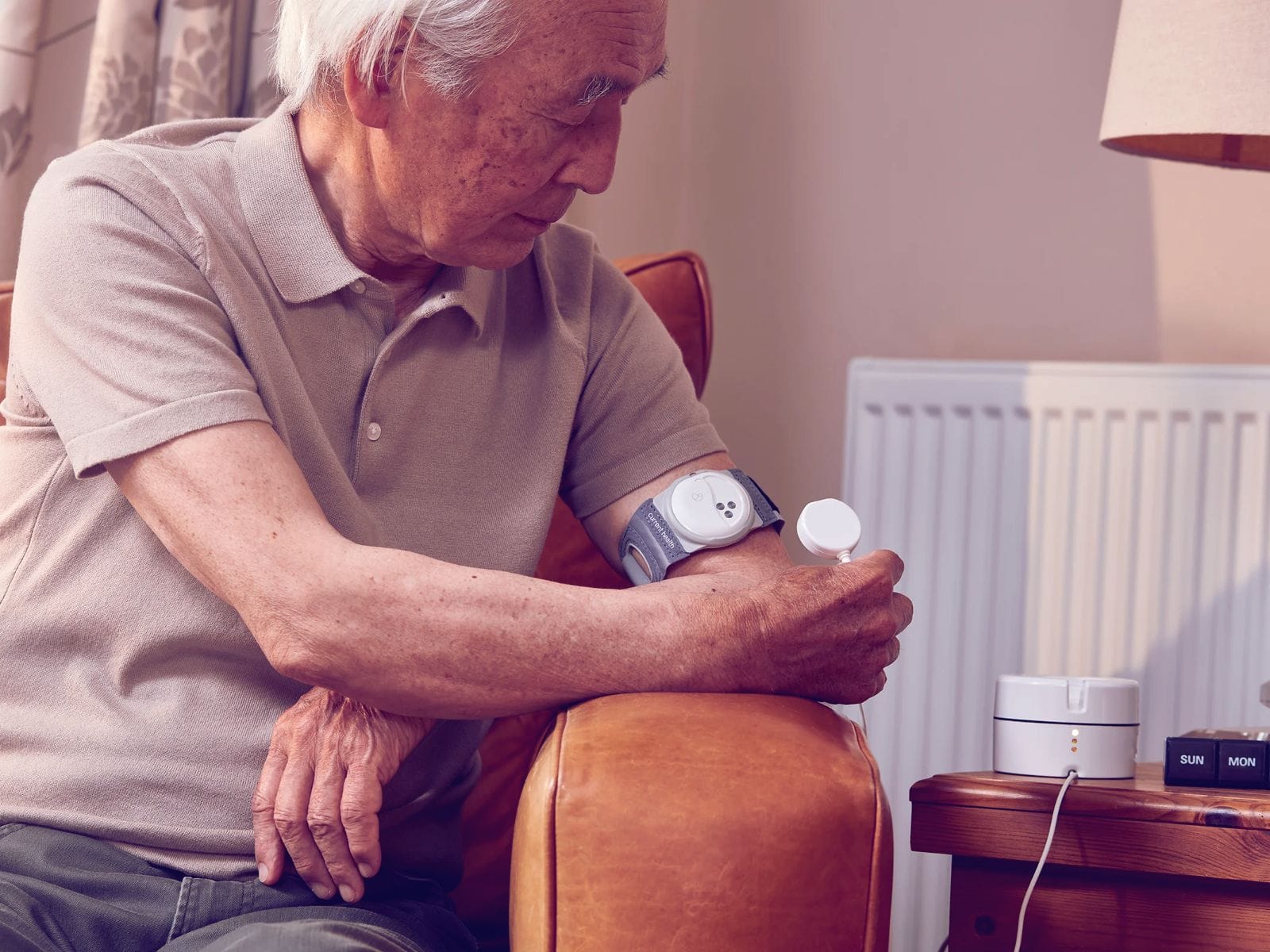
Built for the highest-risk weeks after infusion. Patients wear the devices and rest, with nothing to log or remember. Signals stream to our platform day and night, alarms go straight to our nurses, and each day brings a short nurse-led ICE assessment and a few symptom questions on the tablet.
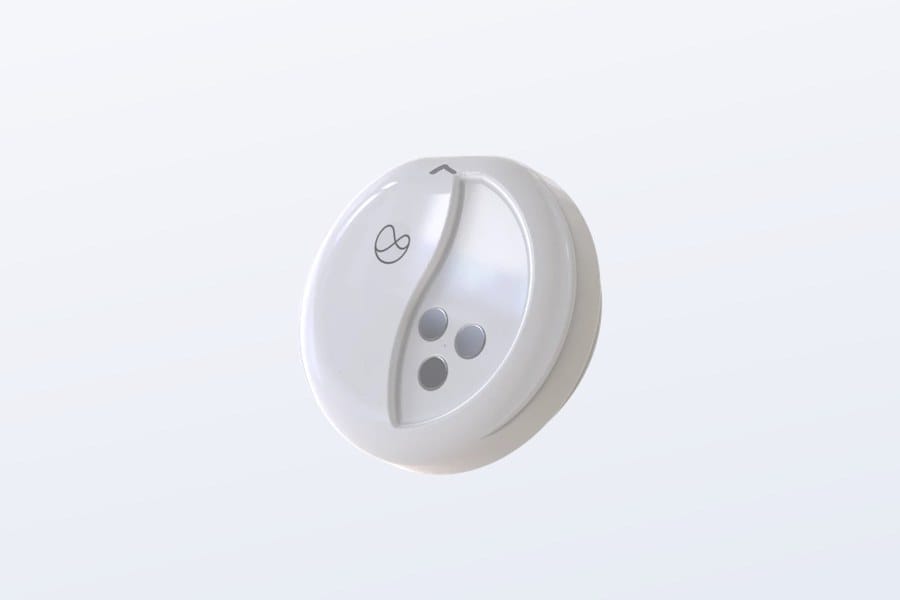
Current Health wearable
Worn on the upper arm. Passively tracks heart rate, respiratory rate, SpO₂, skin temperature, and activity.
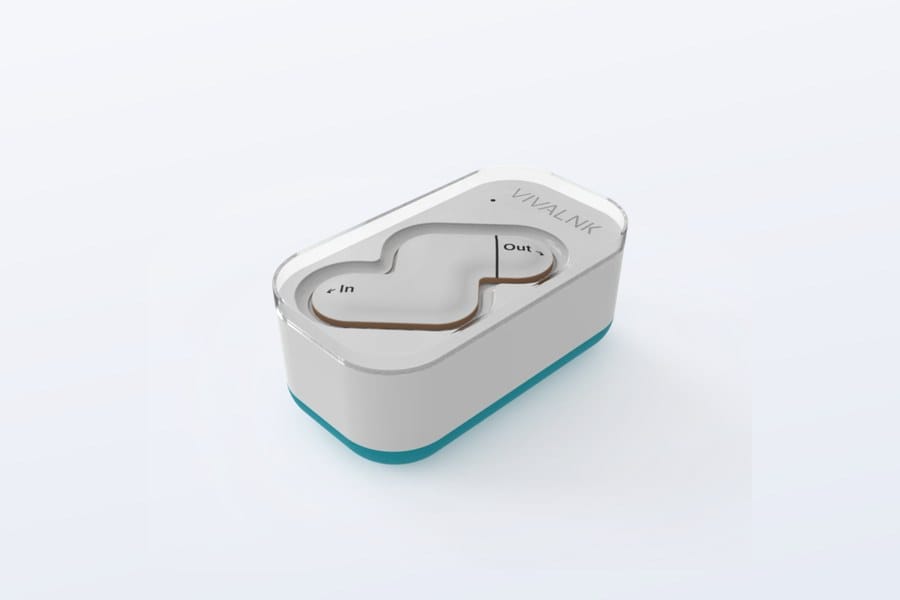
Axillary temperature patch
Passive temperature monitoring, so a fever trend shows hours before a spot check would.
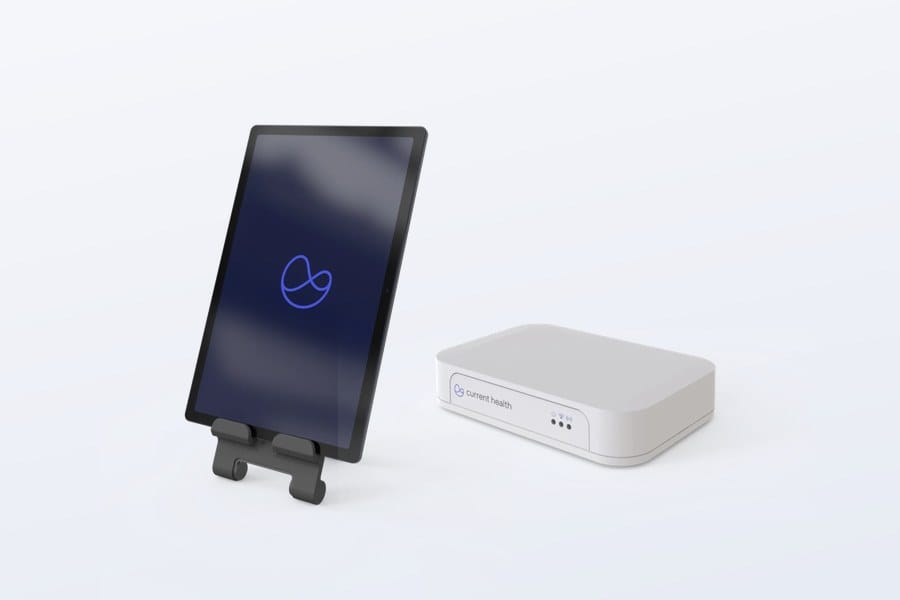
Home hub and tablet
Cellular connectivity so no home Wi-Fi is needed. Video calls, symptom check-ins, and virtual ICE assessments run on the tablet, in 50+ languages.
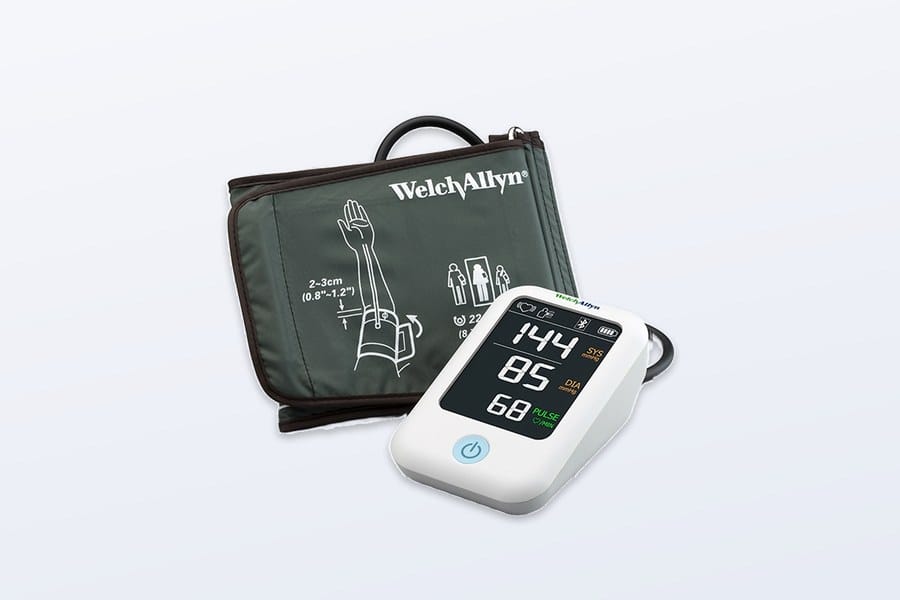
Blood pressure cuff
Blood pressure readings to catch hypotension, which moves CRS to Grade 2 or higher.
Delivering bispecifics? See Current Health for Bispecifics →
Our experience
More outpatient CAR-T experience than any other partner
Our outpatient CAR-T model runs in academic medical centers, health systems, and community practices today.
1,500+
advanced therapy episodes
20,000+
advanced therapy patient monitoring days
7
approved CAR-T products supported




Defining the model
Helping define the outpatient CAR-T model with our partners
Together, we have developed, tested, and published the model for outpatient CAR-T. Our research supports a risk-adapted approach that aims to detect adverse events early, concentrate monitoring when risk is highest, and keep older and frail patients engaged.
Ran it across sites and products
We power the largest multisite outpatient CAR-T program, one consistent model across academic, health system, and community sites of different sizes and geographies, extended across five products.
Showed when the risk concentrates
In our study with Sarah Cannon of 209 outpatient CAR-T patients, 98% of CRS and 96% of ICANS began within 15 days of infusion, so programs can focus monitoring where risk is highest.
Took detection beyond the thermometer
Continuous multi-parameter signals feed patented CRS detection, and a purpose-built virtual ICANS workflow catches neurotoxicity between visits.
Built the evidence with sponsors
We support CAR-T trials and real-world studies of outpatient administration, generating safety evidence that informs outpatient protocols, site-of-care decisions, and label expansion studies.
24/7 Clinical Coordination Center
24/7 clinical coordination, from alarm to action
We pair every patient with our Clinical Coordination Center. Our nurses, drawn from ED and ICU, are licensed in all 50 states, work with live translation, and present as your program, resolving 80% or more of patient issues without escalating to your team.
01
Signals stream passively
Temperature, heart rate, respiratory rate, and SpO₂ reach our platform around the clock, with no patient input.
02
Alarms fire on patterns
Rules agreed with your team look for sustained trends and combined signs, so a single noisy reading doesn't trigger a call.
03
A nurse responds in minutes
Our nurse reviews the alarm and calls the patient and caregiver. Nurses also round proactively each evening, not only when an alarm fires.
04
Treat under your orders
Where your standing orders allow, our nurses start treatment at home, such as antipyretics or Grade 1 CRS care, and follow up the next morning, with no overnight call to your team.
05
Escalate or direct admit
Anything outside your orders goes to your on-call clinician or to a direct admission at your hospital or partner hospital, with the receiving team called ahead.
For patients and caregivers
- Welcome calls before infusion
- Tuck-in calls every evening
- Proactive outreach between alarms
- A nurse one button away, day or night
For your care team
- Every alarm assessed and resolved under your protocol
- Treatment started under your standing orders, avoiding unnecessary calls and admissions
- Escalation to your on-call clinician with the full picture
- Direct admission arranged, with the receiving team called ahead
2 min
to reach a patient or caregiver about an alarm
80%+
of patient issues resolved by our nurses without site escalation
Sarah Cannon
55%
of clinical alerts occur in the 8 overnight hours
Sarah Cannon
Patients and caregivers
What outpatient recovery looks like for patients and caregivers
BEFORE INFUSION
Ready on arrival
The kit arrives ready to use. A nurse calls to welcome the patient, walk through setup, capture baseline vitals, and teach caregivers what to watch for and when to call.
DAY AND NIGHT
Wear it and rest
Monitoring is passive, so caregivers don't stay up taking readings or checking vital signs. A nurse checks in each evening, and caregivers can call us any time they notice confusion, trouble finding words, or anything else that worries them.
ON SCHEDULE
Short check-ins
At the intervals your protocol sets, a nurse runs a short ICE assessment by video, and the patient answers a few symptom questions on the tablet.
IF SOMETHING CHANGES
A nurse calls
Within minutes, following the care team's plan. If the patient needs to be seen, we coordinate the visit and call ahead so the receiving team is expecting them.
ANY TIME
Always reachable
Patients and caregivers can reach a nurse with any question.
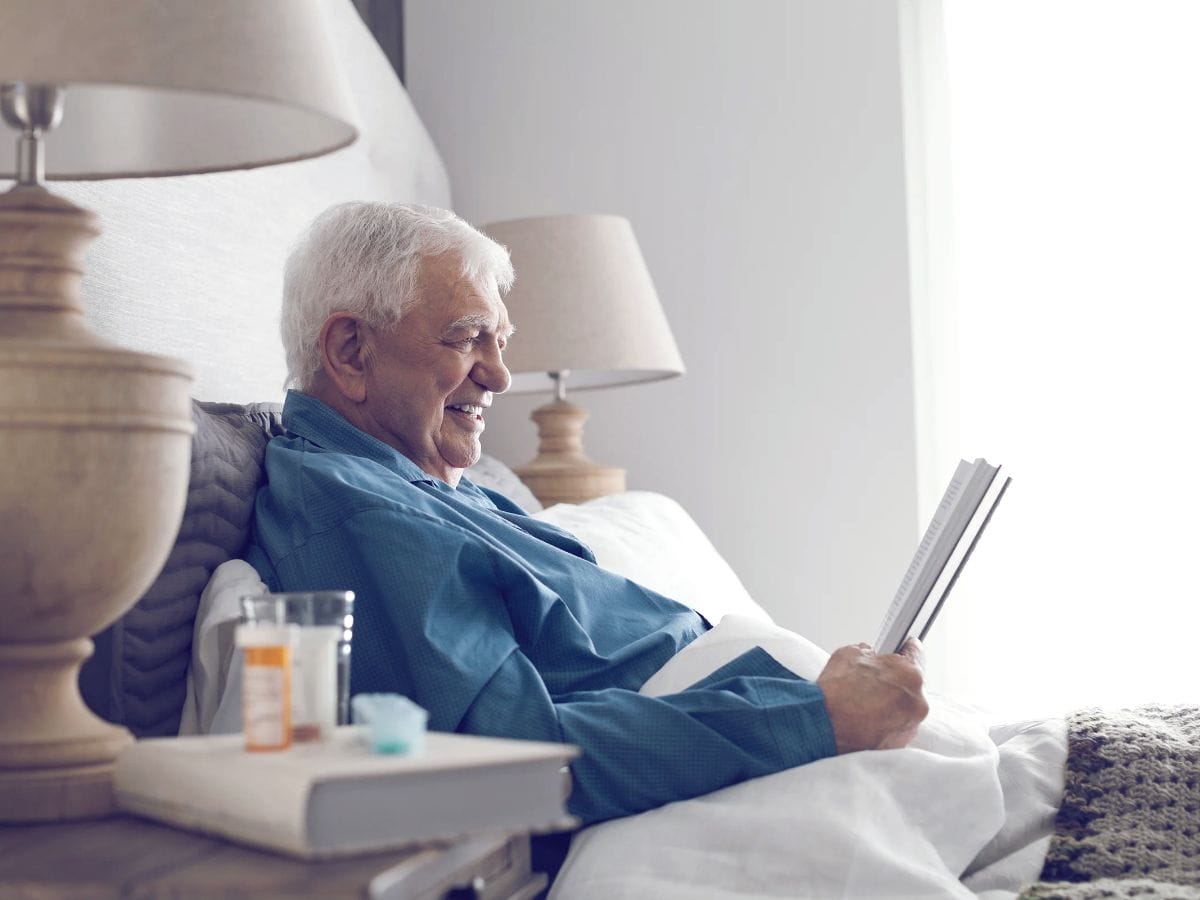
“Thank you for the support given by the whole team during this period of recovery after the CAR-T cell transplant. God bless you!”
CAR-T patient
HCA Healthcare (translated from Spanish)
After-hours care, by protocol
Grade 1 CRS treated overnight without admission
At Atrium Health Levine Cancer Institute, patients receiving cilta-cel were monitored with Current Health. Under the institution's after-hours protocol, patients with Grade 1 CRS and no ICANS were treated at home or in local lodging after a nurse assessment, with a nurse call-back at about an hour and a clinic visit the next morning. Patients with Grade 2 or higher CRS, or any ICANS, went to the ED.
48%
(10 of 21) had CRS managed after hours with no overnight hospital admission
0
median inpatient days (mean 0.9 per patient)
Your care team
Your team hears from us only when they need to
Outpatient CAR-T shouldn't mean more pages for your physicians or a new overnight staffing model. Our model fits around the way your program already works.
Simple enrollment
We onboard, educate, and set up every patient. EHR enrollment is available but not required.
Your protocols
Thresholds, escalation criteria, and standing orders are set with your physician and nursing leads before go-live. Your physicians decide on treatment and site of care, and our nurses act only under orders you approve.
Fewer pages
Our nurses handle routine alarms and patient calls, overnight included, so your clinicians hear only about verified events.
Full visibility
Every call and escalation is documented, with notes written back to your chart once you integrate. Program dashboards track toxicity, escalations, admissions, and patient experience by site and therapy.
Launch support included. We handle protocols, workflows, training, and go-live with your team. Programs already delivering CAR-T are typically live 4–6 weeks from kickoff. You can start at one site, then add sites on the same protocols. Building a new program? Site enablement supports you from the business case through FACT accreditation preparation and manufacturer site qualification, with about six months to first patient.
85%
of patient issues managed without provider escalation at UCSF Health
“They're always watching our patients. So we know when we can't be there, Current Health can.”
Tricia Estacio, RN
Director of Nursing, Parnassus Infusion & Apheresis, UCSF Health
For pharma and biotech
Support outpatient and community CAR-T in your trials and after approval
The same passive monitoring model that runs commercial outpatient programs supports CAR-T trials, from early phase through label expansion. Sponsors have brought us into more than 15 clinical trials for advanced therapies, Phase I to IV, including a multi-country Phase II multiple myeloma CAR-T study of up to 225 participants across 40 sites. Monitoring is adapted to each asset with the safety oversight your protocol requires, and smaller sites can take part without building their own overnight coverage.
Monitoring window
Duration and intensity set to when the asset's toxicities are expected to appear, including later-onset neurotoxicity.
Signals and thresholds
Device configuration, alarm thresholds, and ePRO instruments matched to the asset's safety profile and protocol endpoints.
Escalations and safety reporting
Every trial site follows one pre-agreed escalation protocol. Each alarm, contact, and escalation is timestamped and shared with the investigator for adverse event reporting.
Trial-ready data
Timestamped data with 21 CFR Part 11 audit trails delivered to the EDC you already use. Data quality is watched for every participant, gaps are flagged in real time, and unresolved gaps are followed up by our Clinical Coordination Center.
After approval
Access expansion and patient support programs bring the same model to sites that choose to offer your therapy, with consented, deidentified data on hospitalization and bed days.
Similar CRS rates, shorter hospital stays
Any-grade CRS was 83% outpatient vs. 85% inpatient (P = .89) in 143 CD19 CAR-T patients.
Research highlights
Published evidence for outpatient CAR-T
Our clinical research team works with partner sites to define, test, and publish how CAR-T can be delivered safely outside the hospital.
Comparable toxicity rates outpatient and inpatient1
83% vs. 85%
any-grade CRS outpatient vs. inpatient, no significant difference (P = .89)
When CRS and ICANS occur after infusion2
98% · 96%
of CRS and ICANS events, respectively, occurred within the first 15 days
Outpatient CAR-T across a multisite network3
97 to 100%
30-day survival across four sites
60 peer-reviewed papers and abstracts since 2023.
Explore our clinical researchFAQ
Common questions about outpatient CAR-T with Current Health
Who decides which patients go outpatient?
Your team sets eligibility. We don't gate referrals.
Do patients or caregivers have to take readings?
No. Monitoring is passive. The wearable and temperature patch track vital signs continuously.
Who responds overnight?
Our nurses, drawn from ED and ICU, respond 24/7 and escalate to your on-call clinician per your protocol.
Do we need an EHR integration?
No. It's available if you want it.
See what outpatient CAR-T could look like at your program
We'll walk through our outpatient CAR-T model, your protocols, and what it takes to launch.