Our models / Bispecific step-up dosing
Scale outpatient bispecific step-up dosing with low-burden support
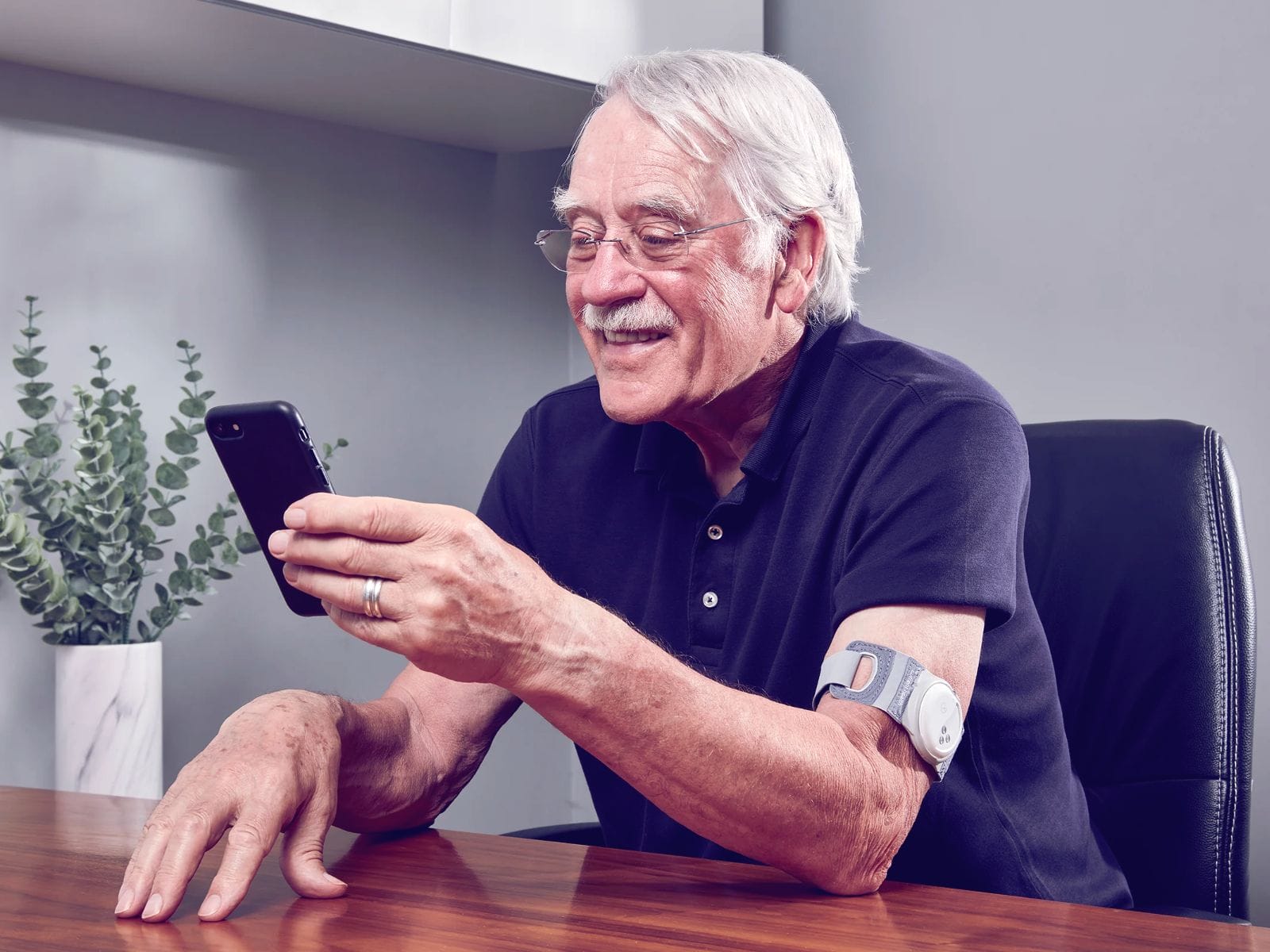
Current Health for Bispecifics pairs lightweight check-ins after each step-up dose with 24/7 support from nurses drawn from ED and ICU, who assess, coordinate, and escalate per your protocol, so academic cancer centers and community practices can deliver step-up dosing outpatient.
24/7
Experienced nurse coverage
1,500+
advanced therapy episodes
20,000+
advanced therapy patient monitoring days
60
peer-reviewed papers and abstracts
Simple for patients
Our model for bispecific step-up dosing
Our bispecific model is built for the defined risk window after each step-up dose. Patients at home or in nearby lodging take scheduled readings, answer short symptom check-ins, and can reach a nurse any time. Our nurses follow up on every reading outside the thresholds agreed with your team, every flagged symptom, and every missed check-in.
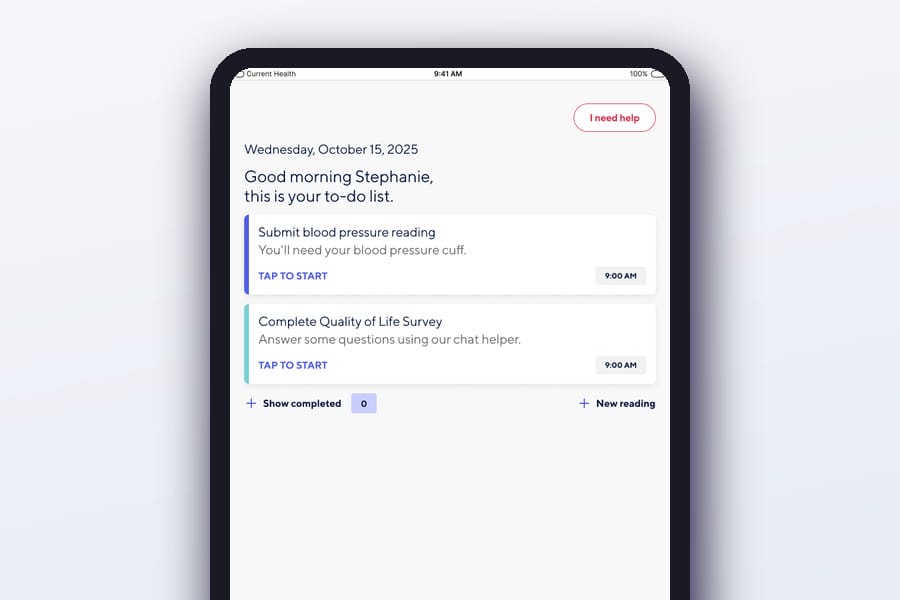
Current Health app
Available in 50+ languages on the patient's phone, or a pre-configured tablet. Reminders, readings, symptom check-ins, video calls, and a direct line to our nurses.
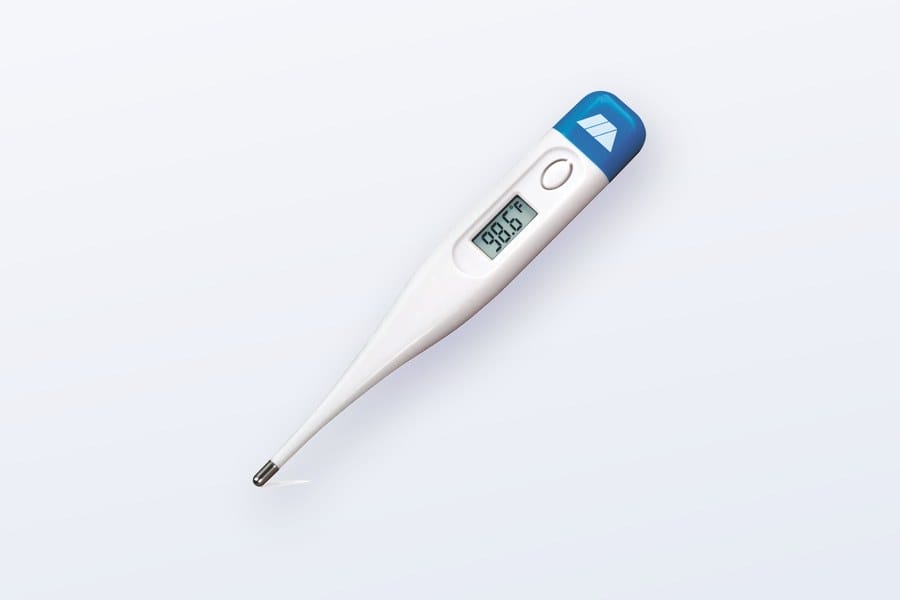
Digital thermometer
Temperature checks on the schedule your protocol sets, sent straight to our nurses.
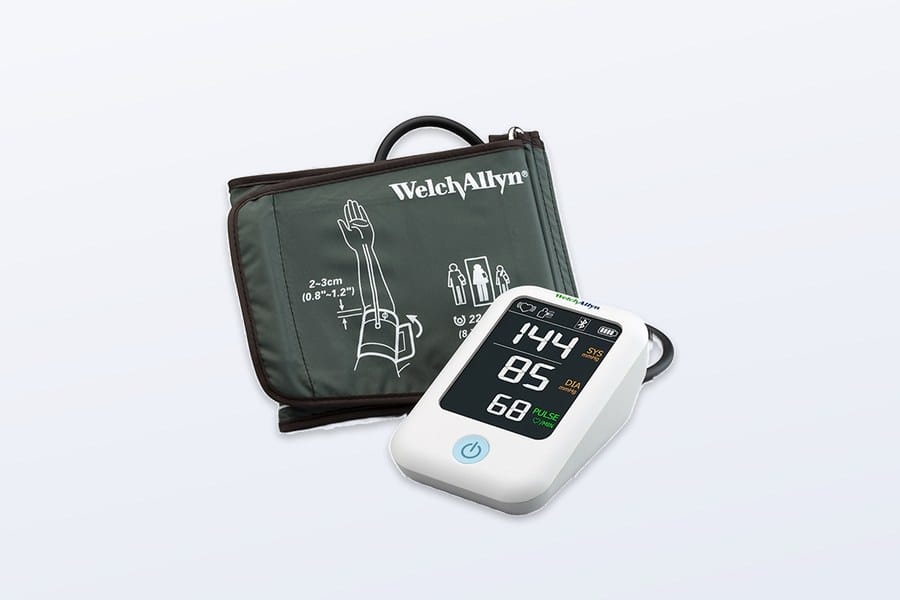
Blood pressure cuff
Blood pressure and pulse readings to help identify hypotension early.
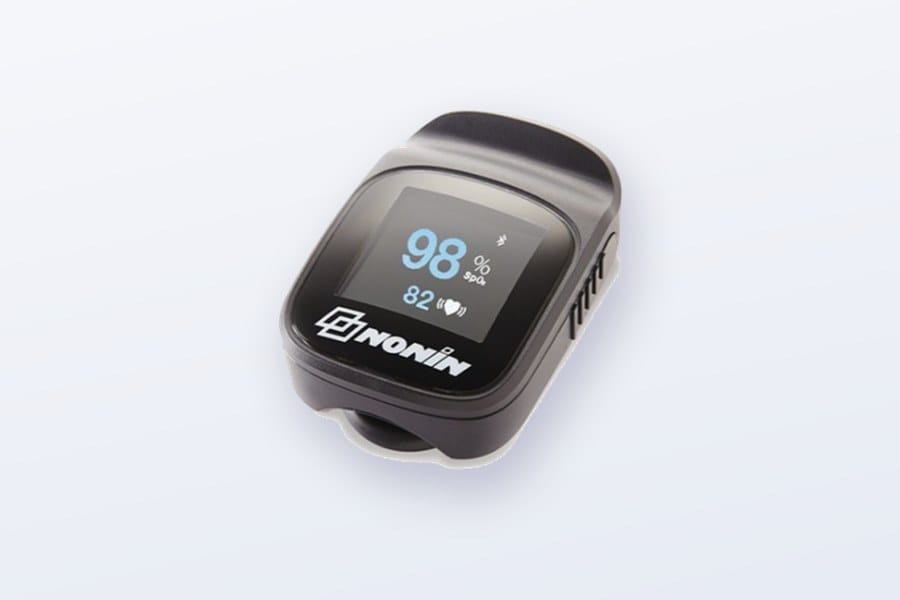
Pulse oximeter
Oxygen saturation readings to help spot hypoxia, a key sign of CRS, including when prophylactic tocilizumab masks fever.
Our experience
Built on our outpatient advanced therapy experience
It runs on the same clinical team and research that support outpatient CAR-T programs at leading cancer centers, with protocols built for the shorter, defined risk window of bispecific step-up dosing.
1,500+
advanced therapy episodes
20,000+
advanced therapy patient monitoring days
Proved outpatient step-up dosing is safe
In our study with Memorial Sloan Kettering, 89% of patients who began step-up dosing outpatient reached full dose, with CRS caught early and managed at low grade.
Protocols built on our research
Evidence-based alert thresholds and escalation pathways for the step-up window, ready to run with your clinical leads.
The same nurses behind our CAR-T programs
Bispecific patients are supported by the nurses, drawn from ED and ICU, who manage our outpatient CAR-T patients, around the clock.
24/7 Clinical Coordination Center
24/7 clinical coordination, from reading to action
We pair every patient with our Clinical Coordination Center. Our experienced nurses, drawn from ED and ICU, are licensed in all 50 states, work with live translation, and present as your program, resolving 80% or more of patient issues without escalating to your team. Nights and weekends are covered too, so step-up dosing that runs into the weekend is no longer a scheduling constraint.
01
Readings and check-ins
Patients submit temperature, blood pressure, oxygen saturation, and symptoms in the app on a set schedule, or call the number on their escalation card any time.
02
Alerts on your thresholds
Evidence-based thresholds for CRS and ICANS, agreed with your team, flag what needs a nurse.
03
A nurse responds in minutes
Our nurse calls the patient, assesses, and runs a virtual ICE assessment when needed.
04
Treat under your orders
Where your standing orders allow, our nurses start treatment at home, such as antipyretics or Grade 1 CRS care, and follow up the next morning, with no overnight call to your team.
05
Escalate or direct admit
Anything outside your orders goes to your on-call clinician or to a direct admission at your hospital or partner hospital, with the receiving team called ahead.
Through maintenance, we take the between-visit work. Your team keeps the decisions.
Overnight and weekend calls
Triage under your standing orders, and page your on-call when criteria are met
Infection triage
Weekly app check-ins and symptom calls, fever and infection triage, and direct admission arranged when ordered
IgG and replacement
Track IgG against your threshold, prompt your APP when replacement is due, and book the infusion once ordered
Prophylaxis, G-CSF, and labs
Adherence, refill, and lab cadence reminders, with counts and results routed to your APP
Dose holds and stopping points
Update the patient's schedule and check-ins, and prompt the decision at each protocol timepoint
2 min
to reach a patient or caregiver about an alarm
80%+
of patient issues resolved by our nurses without site escalation
Sarah Cannon
Patients and caregivers
Consistent clinical check-ins to catch toxicities and manage interventions
BEFORE THE FIRST DOSE
Set up in minutes
The patient gets the app and devices, and a nurse calls to walk through readings and what to watch for.
ON SCHEDULE
Quick readings
Temperature, blood pressure, oxygen saturation, and a few symptom questions at the times your protocol sets.
AS NEEDED
Virtual ICE assessments
A nurse checks for neurotoxicity over video, without an extra clinic visit.
IF SOMETHING CHANGES
A nurse calls
Within minutes, following the care team's plan. If the patient needs to come in, we coordinate the return and call ahead.
ANY TIME
Always reachable
Patients and caregivers can reach a nurse with any question.

“Thank you for letting us sleep at night... knowing you all are watching over my husband.”
Caregiver
Sarah Cannon Cancer Network
Your care team
Scale bispecific delivery without scaling your staff
What limits bispecific programs is scale: more patients, more doses, more sites, and more overnight calls. We take the monitoring and first-line follow-up off your team.
No EHR integration required
No EHR build for your IT team before your first patient. Every call, triage, and escalation is documented in our dashboard, and nursing notes can be written back to your chart when you're ready to integrate.
Your protocols
Alert thresholds, escalation pathways, and standing orders are set with your physician and nursing leads before go-live.
Fewer pages
Our nurses handle routine alerts and patient calls, including overnight, so your clinicians hear about verified events.
Weekend dosing
Where labeling and your protocol allow, step-up dosing that runs into the weekend is no longer a scheduling constraint. Our nurses cover nights and weekends and arrange admission, to your unit or a partner hospital, when your protocol or on-call clinician calls for it.
Through maintenance
After step-up dosing, weekly app check-ins, 24/7 nurse triage for fever and infection, IgG tracked against your threshold with a prompt when replacement is due, and prophylaxis adherence and refill reminders. Your team orders and decides, and patients stay with your team for maintenance doses.
Full visibility
Program dashboards by site, therapy, and cohort, including referral to first dose, time to complete step-up dosing, escalations, rehospitalizations, and ED visits.
No inpatient unit?
We help you set up an admission route with a partner hospital, provide ED briefing materials, and call ahead with a toxicity summary on every escalation.
Fits how you're paid
Where each label and your protocol allow, step-up doses given in your infusion center are billed as outpatient care, not as part of an inpatient stay.
Security and compliance
Built on the Current Health platform, which is FDA Class II 510(k) cleared. We sign business associate agreements and safeguard protected health information under HIPAA.

“This model becomes essential as bispecifics and CAR-Ts move into earlier lines. We will simply not have the inpatient bed capacity unless we shift more patients to outpatient care.”
Neha Korde, MD
Hematologist/Oncologist, Memorial Sloan Kettering
For pharma and biotech
Support outpatient and community step-up dosing in your trials and after approval
The same model that supports commercial bispecific programs supports T-cell engager trials, from early phase through label expansion. Sponsors have brought us into more than 15 clinical trials for advanced therapies, Phase I to IV, including T-cell engager studies of outpatient step-up dosing. Monitoring is adapted to each asset with the safety oversight your protocol requires, and smaller sites can take part without building their own overnight coverage.
Step-up window
Monitoring timed to each dose in the step-up schedule and the window when the asset's toxicities are expected.
Monitoring and thresholds
Guided check-ins or passive monitoring, alert thresholds, and ePRO instruments matched to the asset's safety profile and protocol endpoints.
Escalations and safety reporting
Every trial site follows one pre-agreed escalation protocol. Each alert, contact, and escalation is timestamped and shared with the investigator for adverse event reporting.
Trial-ready data
Timestamped data with 21 CFR Part 11 audit trails delivered to the EDC you already use. Data quality is watched for every participant, gaps are flagged in real time, and unresolved gaps are followed up by our Clinical Coordination Center.
After approval
Access expansion and patient support programs bring the same model to sites that choose to offer your therapy, with consented, deidentified data on hospitalization and bed days.
Outpatient step-up dosing, reaching full dose
89% of patients who began step-up dosing outpatient reached full dose, and every CRS event was Grade 1.
FAQ
Common questions about bispecific step-up dosing with Current Health
Can step-up dosing be delivered outpatient?
Yes, where the product's labeling and your protocols allow. We support patients at home through each step-up dose, with 24/7 nurse oversight and escalation per your protocols.
How is this different from your outpatient CAR-T model?
Our bispecific step-up dosing model uses guided check-ins, with scheduled readings and symptom surveys. Our outpatient CAR-T model is passive, with continuous signals and patented CRS detection. Both are backed by the same 24/7 Clinical Coordination Center.
Who responds overnight?
Our nurses, drawn from ED and ICU, respond 24/7 and escalate to your on-call clinician per your protocol.
Do we need an EHR integration?
No.
See what outpatient step-up dosing could look like at your program
We'll walk through our bispecific step-up dosing model, your protocols, and what it takes to launch.