We’re helping providers and biopharma bring advanced therapies closer to patients.
Transformative AI-powered models for care beyond the hospital.
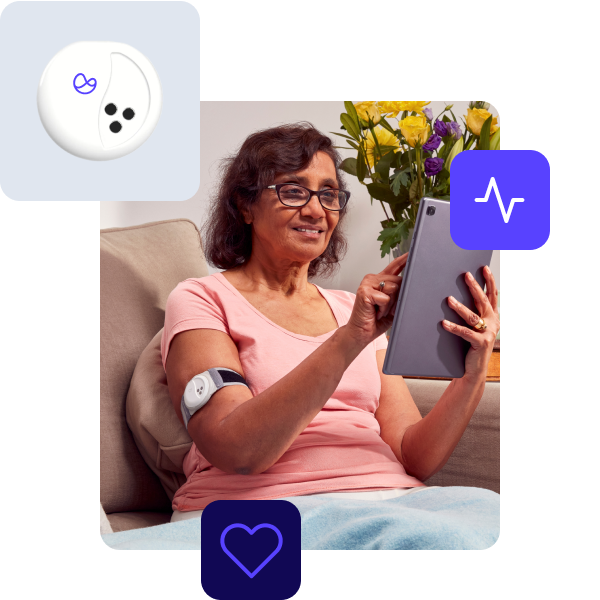
The Current Health platform combines FDA-cleared wearables, AI-driven clinical monitoring, and wraparound virtual services to enable high-acuity care at home. From CAR-T to CHF the system automates data collection, identifies deterioration early, and streamlines triage—unlocking safe, scalable complex care beyond the hospital.
Improve experiences
Care models should fit real life. Patients heal in the comfort of home, caregivers feel supported, and providers stay connected without being overextended.
Extend capacity
Trust first-line monitoring, escalation, and engagement to our virtual nursing team, freeing up on-site staff.
Scale safely
AI-powered alerts help care teams catch complications earlier without alarm fatigue.
Improve margins
Transition high-cost inpatient care (e.g., CAR-T, bispecifics, post-op) to lower cost outpatient settings.
Meet with our team.
Visit us at Booth T322 or schedule time with our team during the meeting to discuss how these models are being implemented across academic centers, community networks, and multisite programs.
Whether you’re focused on moving your advanced therapy models outpatient or building evidence for approvals and label updates, we’re looking forward to the conversation.
As advanced therapies move earlier in care and into community settings, the limiting factor is no longer innovation—it’s delivery.
Programs that succeed are those that:
Treat outpatient delivery as an operating model, not a pilot
Standardize monitoring and escalation across sites
Use inpatient care intentionally rather than by default
Reduce burden on caregivers and clinical teams
Outpatient delivery is becoming the mechanism by which access is expanded and sustained.
Real results that scale.
More insights from our work with Sarah Cannon
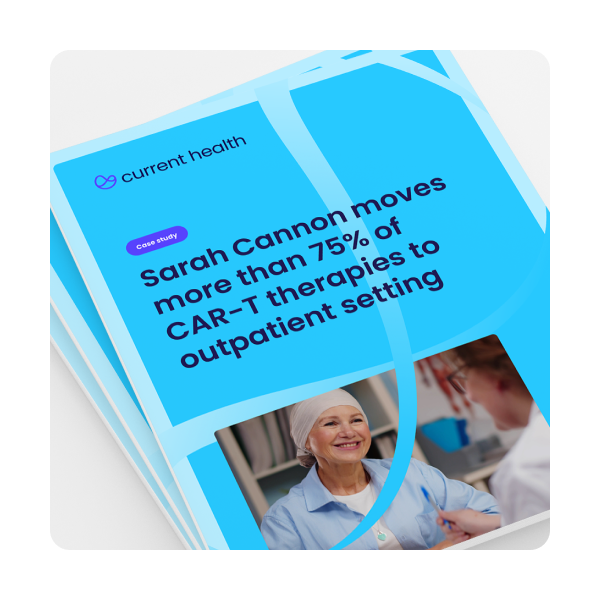
Insights from the Sarah Cannon Transplant and Cellular Therapy Network highlight how an outpatient-first delivery model can expand access while maintaining safety and operational control, with focused monitoring aligned to predictable CRS and ICANS timing.
80%
Of CAR-T patients now cared for in outpatient setting.
75%
Reduction in LOS for patients requiring inpatient care.
12+
Bed days saved for every outpatient case.
2.3 min
Avg alarm response time by our Clinical Command Center.