Launch, Scale, and Win with Outpatient Advanced Therapy Delivery
Eliminate bed bottlenecks, expand geographic reach, improve margins, and optimize 340B— without adding load to your nursing staff. We help health systems and AMCs deliver CAR-T and bispecifics safely in outpatient settings—at scale.
Scale efficiently. Expand your program, optimize your 340B discounts, and turn advanced therapies into a financial win — not just a clinical one.
For Your Team
Monitoring handled. Our nurses handle first-line oversight and ICANS assessments. Your clinical staff stays in the loop — not on call.
For Your Patients
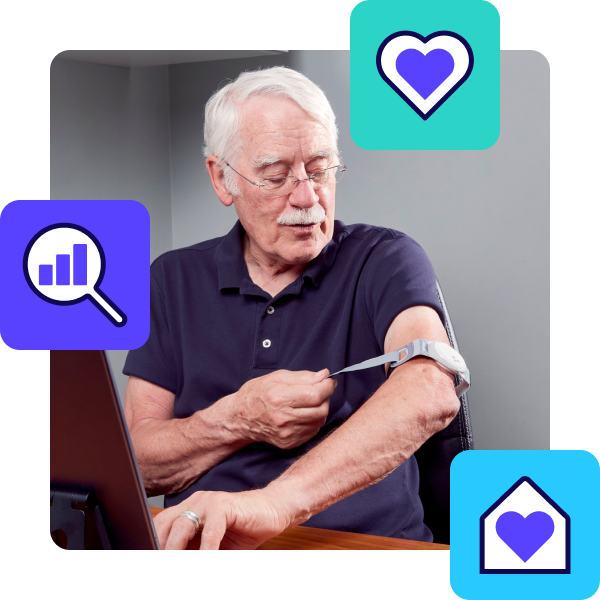
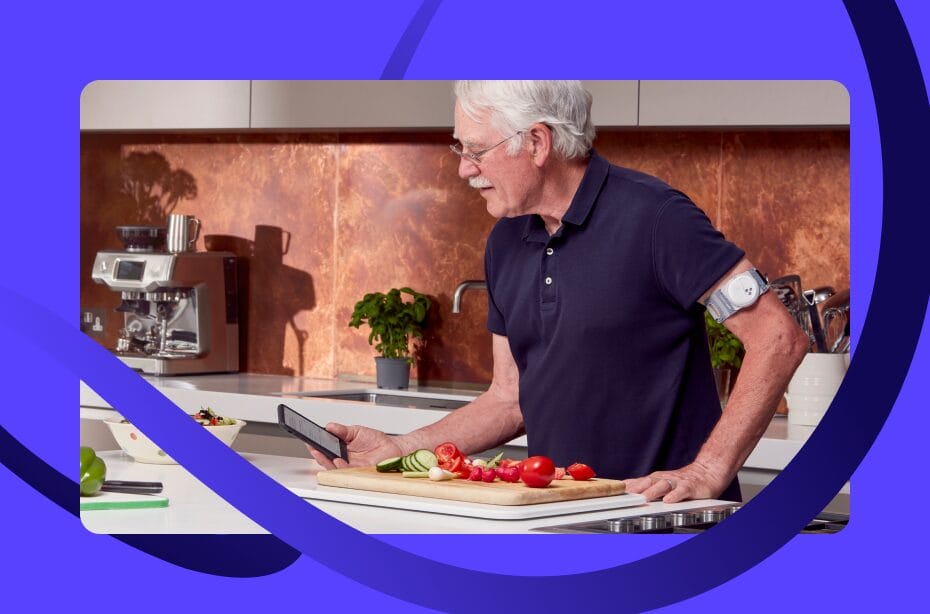
Passive care, active recovery. Patients wear our monitor and go home. We watch. They rest.
Why Advanced Therapies Need a New Delivery Model
The traditional model of extended inpatient stays for CAR-T and bispecific monitoring limits access, strains capacity, and adds unnecessary cost. With the right infrastructure, most patients can be safely monitored in outpatient or home settings.
Inpatient Bottleneck
Standard of care requires 1-3 weeks of inpatient monitoring, but most hospitals have limited beds. This caps how many patients can receive life-saving therapies—and caps how fast your program can grow.
Unsustainable Costs
At $3,000+ per inpatient day, extended stays add $30-60K to already expensive treatments. Payers and health systems need a more sustainable model.
Limited Access
Only ~150 certified centers can deliver CAR-T, mainly at urban AMCs. Patients travel hundreds of miles and stay weeks away from home. We can bring therapy closer to patients.
Staff Overload
Extending your advanced therapy program shouldn’t mean 24/7 monitoring tasks for your nursing team. Without the right infrastructure, scaling means burning out the people who deliver care.
Our Proven Model for Safe Outpatient Delivery
We combine FDA-cleared continuous monitoring, AI-powered adverse event detection, and 24/7 Clinical Command Center support to enable safe outpatient delivery of advanced therapies.
Remove burdens for patients and caregivers through continuous, passive health monitoring
Our 24/7 Clinical Command Center handles first-line monitoring and triage, so your team can focus on delivering care.
Calmer escalations through AI-enabled detection of CRS 7 hours (median) earlier than standard of care
Virtual ICANS assessments with ICE scoring by trained neurological RNs
Standardized escalation protocols, with in-home treatment and controlled escalation back to the treatment center
Longer term, low-touch symptom monitoring
AI-Powered CRS Detection
Virtual ICANS Assessments
24/7 Clinical Command Center
Supportive Experience
Therapies We Support
CAR-T
Yescarta, Kymriah, Breyanzi, Tecartus, Abecma, Carvykti and emerging products
Bispecific Antibodies
Tecvayli, Talvey, Elrexfio, Lunsumio, Columvi, Epkinly and step-up dosing protocols
TIL Therapy (In Development)
Tumor-infiltrating lymphocyte therapies like Amtagvi for solid tumors
Sarah Cannon, the nation’s largest cell therapy provider, used Current Health to scale to 90% outpatient CAR-T delivery — adding capacity for more patients without adding beds, and saving 1,200 bed days in the first 100 cases alone.
90%
Of CAR-T patients now cared for in outpatient setting
67%
Of patients stayed out of the hospital for at least 72 hours
12+
Bed days saved for every outpatient case
29%
Of patients with a clinical alarm successfully managed at home
"Expanding access to CAR-T therapy requires reimagining how and where care is delivered. Partnering with Current Health has allowed us to safely transition CAR-T to an outpatient setting—supporting patients beyond the hospital walls, without compromising safety, quality of care, or clinical oversight."
Why Scale Outpatient Delivery?
From AMCs to regional health systems, we help you unlock the strategic and financial benefits of outpatient advanced therapy delivery, with an implementation model designed to get you to scale quickly and easily.
Eliminate Bed Bottlenecks
Free up inpatient capacity by shifting CAR-T monitoring to outpatient. Treat more patients without adding beds.
Expand Geographic Reach
Extend your cell therapy program to satellite locations and community partners, bringing care closer to patients.
Preserve 340B
Outpatient delivery preserves 340B pricing for eligible entities, creating significant margin on high-cost therapies.
What Makes a Current Health Partnership Different?
Catch toxicities with confidence.
Our platform has been shown to detect signs of CRS 7 hours earlier than standard of care. Integrated ICANS assessments
Support caregivers and reduce uncertainty.
Continuous monitoring and nurse support help families feel connected and informed.
Standardize care and publish insights.
Ensure consistency as you scale outpatient care models. We'll also help you measure and publish program insights.
Improve workload without sacrificing vigilance.
Offload ICANS assessments, first-line monitoring, triage, and escalation to our 24/7 nurse team.
What Patients and Caregivers Say
"You guys have actually been wonderful. It puts you at ease when you know we don't gotta watch everything and someone else is looking after her too, but I appreciate it."
"Muy Buenos Dias! Gracias por el apoyo dado por todo el equipo en este periodo de recuperacion posterior al transplante de las celulas CAR-T. Dios les bendiga!"
"Good morning, thank you for your support given by all the team in this period of recovery post CAR-T transfusion. God bless you all!"
"Thank you for letting us sleep at night....knowing you all are watching over my husband."
Our Experienced Nurses Help You Scale Excellent Experiences
With deep experience in ED and ICU environments, our in-house team of RNs specialize in remote identification and management of adverse events following advanced therapy administration.
24/7
Support provides continuous coverage and escalation